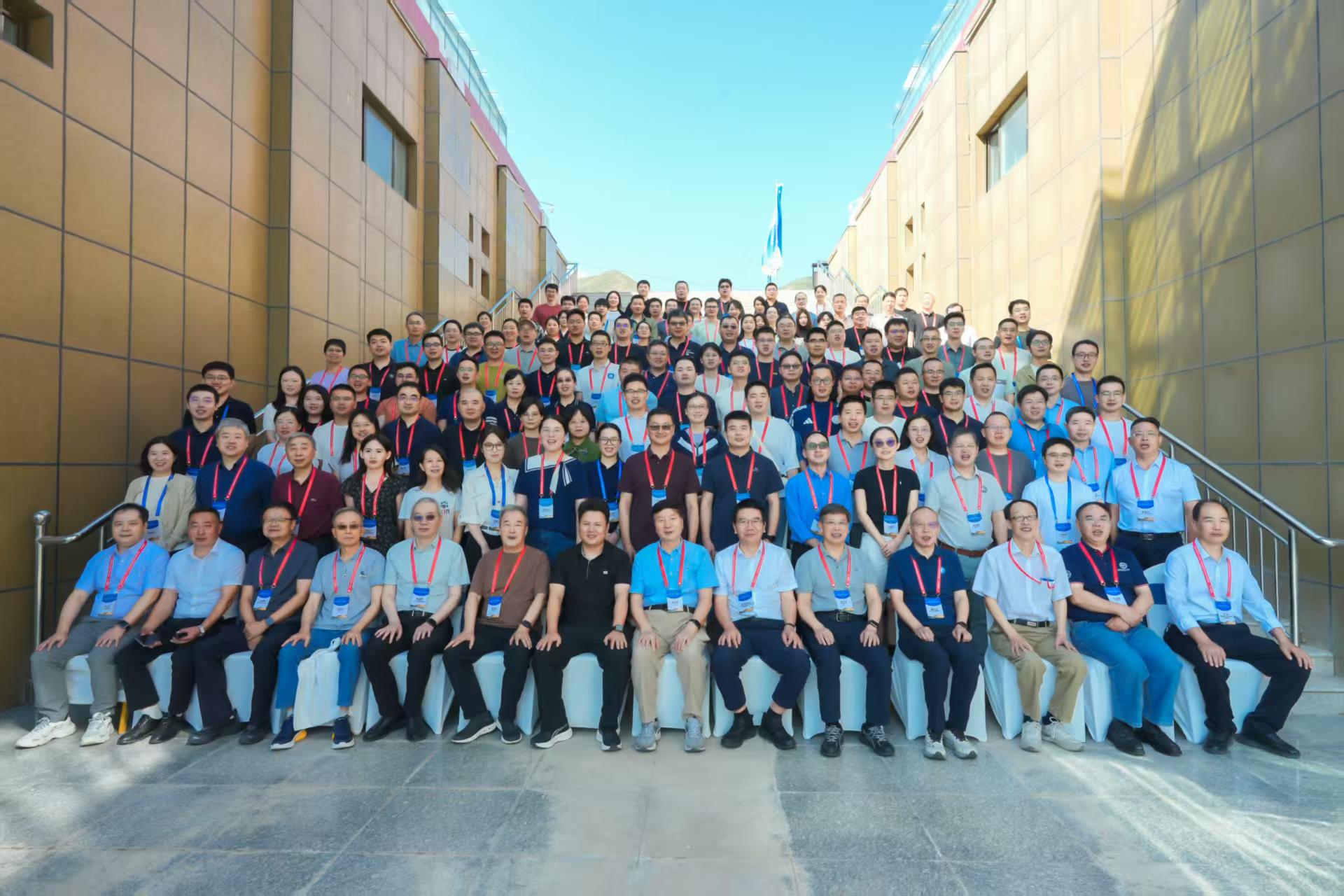
From July 26 to 30, 2026, the 5th China (Kambula) Volcanic-Intrusive Rock Forum was held at the Kambula World Geopark in the Huangnan Tibetan Autonomous Prefecture of Qinghai Province. The forum was jointly organized by the Committee of Volcanology and Chemistry of the Earth's Interior and the Committee of Magmatic Petrology of the Chinese Society for Mineralogy, Petrology and Geochemistry, the Chinese National Committee of the International Association of Volcanology and Chemistry of the Earth's Interior (IAVCEI), and the Editorial Office of Acta Petrologica Sinica. A responsible official from the Zhangshiyan National Geopark Management and Protection Center attended the event, joining experts and scholars from universities, research institutions, and geopark networks across the country. Together, they engaged in in-depth discussions on the theme "Magmatic System Evolution, Volcanic Eruptions and Habitable Earth, and Sustainable Development of Geoparks," focusing on cutting-edge issues in igneous petrology and geopark development.
Focusing on Academic Frontiers to Enhance Professional Expertise
The forum was held at the Kambula World Geopark, located in the western segment of the West Qinling Mountains on the northeastern margin of the Qinghai–Tibet Plateau. The geopark uniquely preserves Triassic andesitic marine volcanic rocks from the Tongren region, Cretaceous intracontinental volcanic eruption records, and the Late Permian–Early Triassic Alaskan-type complex in the Longwu Gorge. This geological setting serves as a natural laboratory for studying the evolutionary history of the Paleo-Tethys Ocean and Late Mesozoic intracontinental volcanic activity in the northeastern Qinghai–Tibet Plateau. Centered on the identification and reconstruction of trans-crustal magmatic systems—a frontier topic in international petrology and volcanology—the forum featured multiple sessions covering topics such as the environmental and climatic effects of magmatic activity, magma genesis and eruption mechanisms, new paradigms in volcano-intrusive complex research, science communication of granites and volcanic rocks, and the sustainable development of geoparks.
The official from the Zhangshiyan National Geopark Management and Protection Center attentively listened to a number of high-level academic presentations and engaged in thorough exchanges with participants on igneous petrology, magmatism and its resource-environmental effects, and the conservation and utilization of geological heritage. All attendees agreed that the forum brought together the latest research achievements in China's volcanic-intrusive rock studies, providing geopark managers with solid academic support for understanding regional geological evolution and enhancing the quality of scientific interpretation.
Learning from Successful World Geopark Applications to Boost the "Dual Creation" Campaign
Kambula World Geopark was successfully designated as a UNESCO Global Geopark in 2025. As a newly inscribed World Geopark, Kambula has accumulated valuable experience in geoheritage conservation, science popularization system development, and integrated cultural-tourism development.
Currently, Zanhuang County is vigorously advancing its "Dual Creation" campaign—striving both for the designation of Zhangshiyan as a UNESCO Global Geopark and for the accreditation of Zhangshiyan as a National 5A-Level Tourist Attraction. In April 2026, the National Forestry and Grassland Administration organized an expert review of the application materials for the Hebei Taihangshan Zhangshiyan Global Geopark nomination. At this critical juncture, the official from the Management and Protection Center took the opportunity during the forum to conduct on-site inspections of Kambula's museum operations, interpretive signage systems, and geoheritage protection and management mechanisms, gaining valuable insights for refining Zhangshiyan's application documents and upgrading its soft and hard infrastructure.
Deepening Exchanges and Cooperation to Jointly Promote Sustainable Development
During the forum, the Zhangshiyan official engaged in extensive exchanges with representatives from various geoparks across the country. As the type locality of "Zhangshiyan landform"—one of China's three major sandstone landforms—Zhangshiyan National Geopark boasts 87 geological heritage sites, characterized by long steep cliffs composed of Proterozoic quartz sandstone, "Ω"-shaped zhang valleys, and three-tiered stepped escarpments. The official shared Zhangshiyan's practical experiences in geoheritage conservation, science-based educational tourism, and scenic area management, and established communication and liaison mechanisms with several other geoparks.
Previously, Zhangshiyan National Geopark had entered into a sister-park partnership with the Enshi Grand Canyon–Tenglongdong World Geopark, with both sides continuously expanding cooperation in geoheritage conservation techniques, translation of research outcomes, and mutual promotion of specialized educational travel products. Participation in the Kambula forum further broadened Zhangshiyan's external exchange network, injecting new momentum for future cross-regional collaboration and the sustainable development of the geopark.
Conclusion
In July, Kambula is graced by the striking contrast of red-bed Danxia cliffs and the emerald waters of the Yellow River. The official from the Zhangshiyan National Geopark Management and Protection Center returned home with a wealth of knowledge and experience. The participation not only enhanced the team's professional competence in igneous petrology and geopark development but also accumulated wisdom and strength for Zhangshiyan's bid for World Geopark status. Looking ahead, Zhangshiyan will embrace the Chinese geopark network with a more open attitude, steadfastly advancing on the path of protecting precious geological heritage, popularizing Earth science knowledge, and promoting sustainable local development.