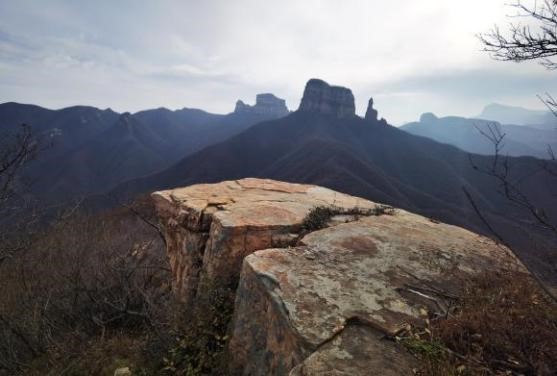
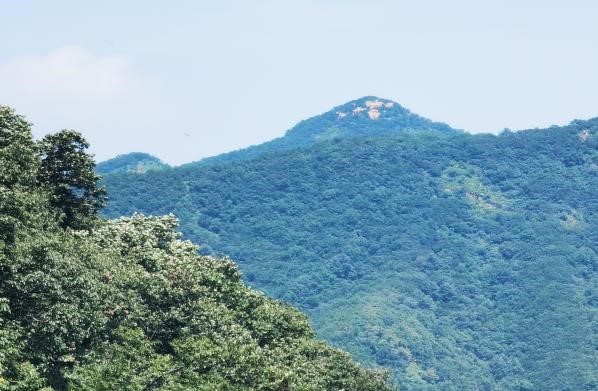
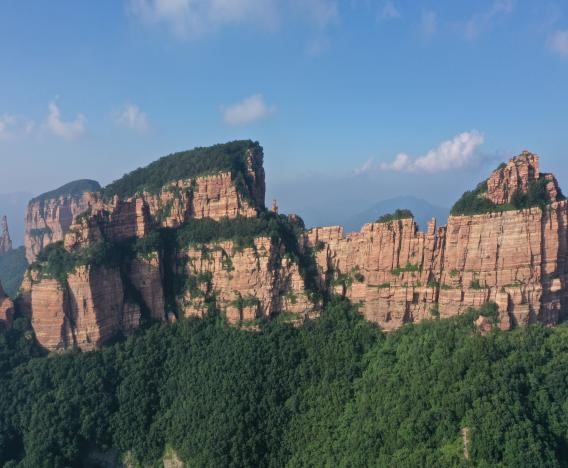
Within Zanhuang Zhangshiyan National Geopark, the Zhangshiyan landform stands out as the most iconic among all landform types due to its uniqueness. Characterized by its continuous long red cliff walls, connected sets of “Ω”-shaped zhang valleys, and sharply angular block-like forms, it is distinguished by its grandeur and by the self-similarity of its geometric shapes (including both positive and negative landforms), making it clearly different from other sandstone landforms in China, such as Danxia landforms and Zhangjiajie landforms.
The development of the Zhangshiyan landform can be broadly divided into four stages.
(1) Ridge Retreat — Development Stage of Long Cliff Walls, Terraced Ledges, and Rock Fissures (Embryonic to Juvenile Stage)
Due to tectonic uplift of the mountains, the ground slope increased and surface denudation intensified. Under the influence of differential erosion, the overlying rock strata retreated as a whole, exposing the underlying hard quartz sandstone layers as ledges, while wedge-shaped rock fissures developed along their margins and cut laterally into the rock mass. Rock fissures of various sizes in front of the second cliff ledge at sites such as Yixiantian, Xiaotianti, Huaiquan, Echo Wall, and Donglingbei are controlled by tectonic fracture zones and constitute the main mechanism causing cliff collapse.
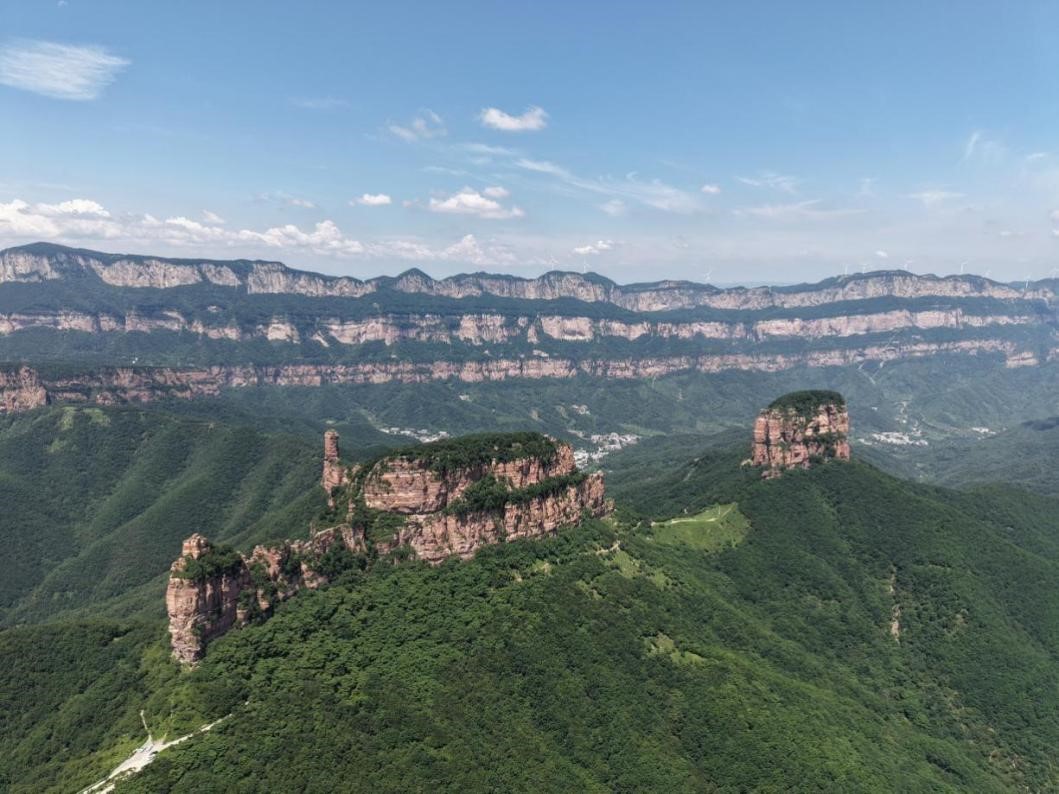
(2) Lane Valley Development — Formation Stage of Mesa Mountains, Broken Walls, and Ω-Shaped Zhang Valleys (Youth Stage)
As rock fissures develop, they form lane valleys, such as Lovers’ Gorge and Sanxiu Gorge, and then rapidly expand into zhang valleys. New fissures form on both sides of these valleys and further develop into secondary lane valleys, creating nested valleys, such as the “Nine Sets,” namely the Ω-shaped valleys in front of the second cliff ledge. During this stage, the mountains are divided into mesa-like block mountains, which further develop into broken walls. Examples of mesa mountains include Dawangtai and Xianrentai, while broken walls include Gufuyan and Qinyuya.
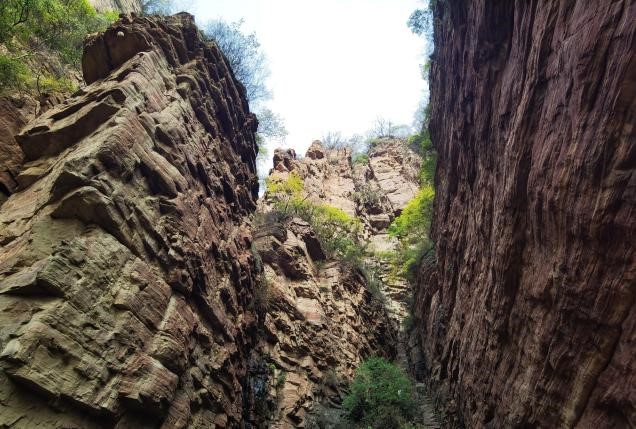
(3) U-Shaped Valley Development — Formation Stage of Stone Pillars and Peak Ridges (Mature Stage)
On the one hand, zhang valleys continue eroding downward into lower strata to form superimposed nested valleys. On the other hand, as secondary lane valleys lengthen and widen, they cut through the intervals between zhang valleys, forming mesa mountains, rock walls, and rows of peaks, such as Qinyuya, Jianfeng, Dawangtai, Jiguanzhai, Jiunvfeng, and Baxianling.
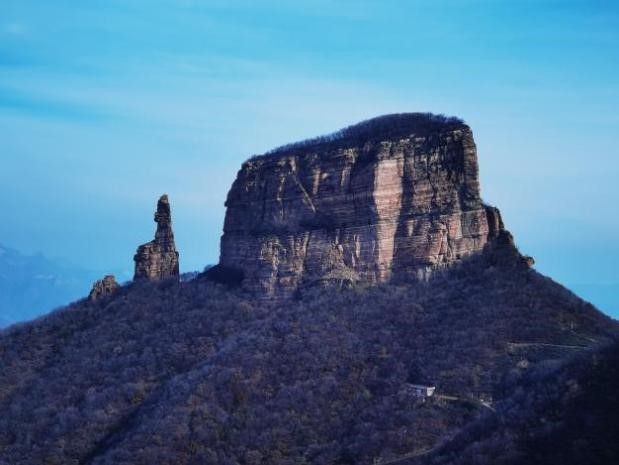
(4) Tower-Pillar Development — Formation Stage of Blocky Residual Hills and Rock Remnants (Old Age Stage)
Mesa mountains, rock walls, and rows of peaks undergo further lateral erosion and dissection, developing into tower pillars (stone pillars), which are then further reduced and collapse to form blocky residual rocks and scattered rock debris piles. The formation of these blocky residual rocks and rock piles marks the end of one evolutionary cycle of the Zhangshiyan landform. There are dozens of isolated peaks and stone pillars in the park, some vividly resembling people or animals and possessing extremely high aesthetic value, such as Xianren Peak, Eight-Sided Buddha, Cosmic Peak, Heavenly Bell Landing on Earth, and Husband-and-Wife Peaks.