The park area is rich in cultural landscapes, which can be divided into historical and cultural landscapes, such as ancient temples including Huaiquan Temple, Yuantong Temple, and the Jade Emperor Temple; ancient post roads passing through the mountains and connecting Hebei and Shanxi; ancient inscriptions such as the Auspicious Guisi Day Stele, Thousand-Buddha Stele, and Zhangshiyan cliff inscriptions; and ancient military works such as late Ming military strongholds and the Northern Wei ancient Great Wall. It also includes folk cultural landscapes, such as Zhangshiyan-style dwellings and local folk cultural phenomena, as well as modern cultural landscapes, including modern buildings and tourism facilities.
(1) Huaiquan Temple
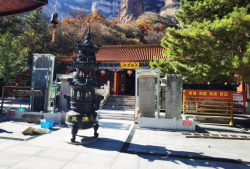
Huaiquan Temple, also known as Huaiquan Temple, is located at the junction of Huaiquan Valley and Echo Valley in the Zhihutao Scenic Area of Zhangshiyan. It is a county-level cultural relic protection unit of Zanhuang County. Huaiquan Temple is also called “Stone Buddha Temple” and is located on Zhihutao Mountain in Taihang Mountain Zhangshiyan Geopark. The mountains here overlap in a circle-chair shape, with towering cliffs on three sides and a stream in the middle known as Huaiquan Valley. The temple is situated here and is named because it is near the source of the Huai River. In 1988, with the development of Zhangshiyan Scenic Area, three main halls were rebuilt. From 1993 to 1996, the temple was renovated again. Covering an area of 2,770 square meters, it became one of the larger Buddhist activity venues in the county after reconstruction, with more than ten resident monks. With the opening of Zhangshiyan Scenic Area and its growing reputation, the number of visitors coming for Buddhist activities has increased year by year.
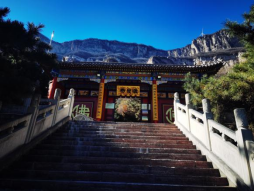 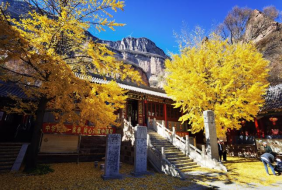
|
Huaiquan Temple |
(2) Yuantong Temple
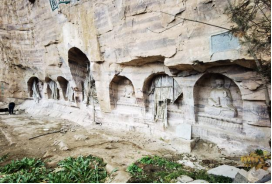
Yuantong Temple, commonly known as Runai Temple or Ruquan Temple, is a major part of “Rockside Flower Palace,” one of the eight famous sights of Zhangshiyan Scenic Area. The original halls of Yuantong Temple were built on the steep cliff of the second cliff ledge, backed by a dangerous cliff and overlooking a deep valley. It looked like a temple suspended in midair, hence the name “Rockside Flower Palace.” It was first built in the Yuan Dynasty and was repaired and rebuilt in successive dynasties, as recorded in the Stele Record of the Construction of Yuantong Temple in the 15th year of the Hongzhi reign of the Ming Dynasty (1502). During the Chenghua period, Chan masters Yuekong and Deming of Jinyang gathered support from various prefectures and rebuilt the temple. After two years and three springs, the upper and lower halls, sacred statues, monks’ rooms, kitchens, and dormitories were all completed. Unfortunately, these buildings were destroyed in a fire during the Xianfeng period of the Qing Dynasty. Although the temple buildings are no longer visible today, some historic remains still exist, such as the image of Guanyin Bodhisattva on the cliff wall. At the foot of the cliff stand two damaged steles recording the boundary of Zhangshiyan, cultural relics from the 44th year of the Wanli reign of the Ming Dynasty (1616). Extending outward from the cliff base is a platform of more than 200 square meters, which is the temple site. On the east side of the site is a natural cave about 20 meters high, 8 meters wide, and more than 10 meters deep. On the west side of the cave entrance is a Guanyin Temple, housing a stone statue of “Child-Giving Guanyin,” which has a kind expression and vivid form. Two walnut trees at the cave entrance rise into the sky like intertwined branches, with unique shapes and strong vitality.
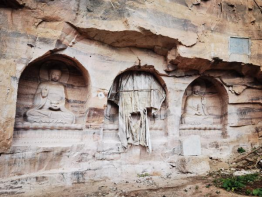
| 
|
Yuantong Temple |
(3) Jade Emperor Temple
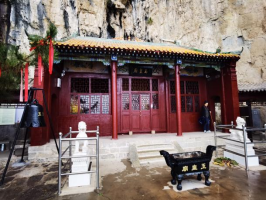
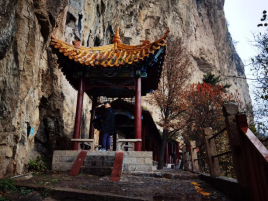
Located in Zhangshiyan Scenic Area, the Jade Emperor Temple is an important cultural landscape within the scenic area. It was built in the Yuan Dynasty, later destroyed by fire in the Qing Dynasty, and rebuilt on its original site in 1997. The temple enshrines the Jade Emperor and has long been popular with worshippers, serving as a sacred place for believers to pray for blessings and make wishes. Zhangshiyan Jade Emperor Temple is not only a religious site, but also contains rich historical culture and folk traditions. Its architectural style is simple and elegant, preserving many ancient buildings. These buildings are not only exquisitely structured, but also richly decorated, making them valuable materials for studying ancient architectural art and culture. In addition, the temple’s distinctive architectural style integrates the essence of ancient architectural art and reflects the traditional aesthetic concepts of the Chinese nation.
| 
|
Jade Emperor Temple |
(4) Ancient Post Road Connecting Hebei and Shanxi
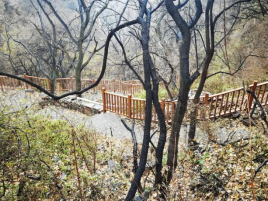
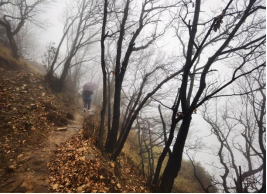
Taihang Mountain Zhangshiyan Geopark is located at the junction of Hebei and Shanxi. Since ancient times, there have been many transportation routes from the central Hebei Plain to the Shanxi Plateau. The area where the park is located contains several ancient post roads leading to Shanxi. For example, the Qipanshan Hebei-Shanxi Ancient Post Road is a stone-paved road that follows the riverbed upstream for ten kilometers from Zaolin Village into Shanxi. Since the Han Dynasty, it has served as a main route connecting Hebei and Shanxi provinces.
| 
|
Hebei-Shanxi Ancient Post Road |
(5) Zhangshiyan Cliff Inscriptions and Other Ancient Inscriptions
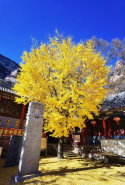
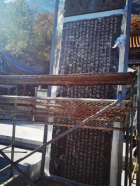
Since ancient times, the people of Zhangshiyan have passed down a folk rhyme: “Layer upon layer is Zhihutao; towering red cliffs are Zhangshiyan.” This single line vividly expresses the magnificent and majestic scenery of today’s Zhangshiyan Tourist Scenic Area, with its overlapping mountains and cliffs. The Zhangshiyan cliff inscription records this historical fact and adds cultural and cultural-relic value to the area, making the scenery even richer and more impressive. It leaves tourists, especially culturally minded visitors and cultural relic enthusiasts, amazed and full of praise. The Zhangshiyan cliff inscription consists of three large seal-script characters carved on the red rock wall of the second cliff ledge, about 7 to 8 meters above the ground. It was written by a Ming Dynasty minister at the invitation of Dabao, the abbot of Huaiquan Temple.
|  
|
Huaiquan Temple Inscriptions |
(6) Duanling Ancient Pass and the Northern Wei Ancient Great Wall
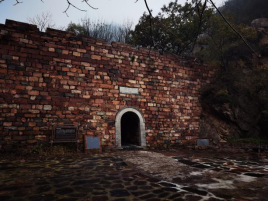
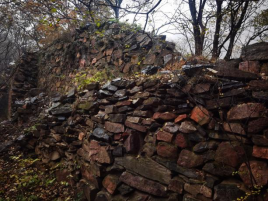
Duanling Pass is one of the ancient Great Wall passes between Hebei and Shanxi. It was built by the Bazhi clan of the Northern Wei Dynasty and rebuilt during the Jiajing reign of the Ming Dynasty. Spanning Duanli Valley, it is 8.5 meters high, with two gates inside the pass. The gate passage is 10 meters long. The entire pass wall is built of stone, with a total length of 20 meters and a top width of 9 meters. In the mountains northwest of the pass are the remains of the Northern Wei ancient Great Wall.
| 
|
Duanling Ancient Pass Northern Wei Ancient Great Wall |
(7) Shizhushan Mituo Temple
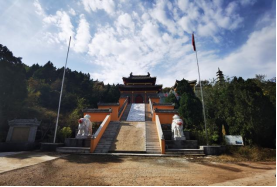
Mituo Temple is located in a cypress forest 300 meters northwest below the towering stone pillar peak of Shizhushan. It covers an area of 3,000 square meters, and its original building area was 1,000 square meters. The temple is now officially known as “Shizhushan Huguo Mituo Temple.” It was originally called Mituo Nunnery, first built during the Wanli reign of the Ming Dynasty, and was one of the “Eight Tiantai Nunneries.”
| 
|
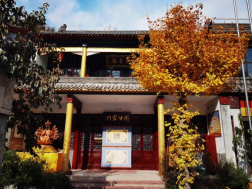
Shizhushan Mituo Temple Guanyin Hall of Mituo Temple |
(8) Former Site of the Headquarters of the First Taihang Military Subdistrict
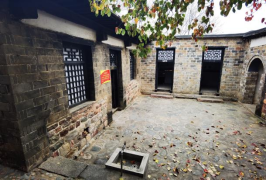
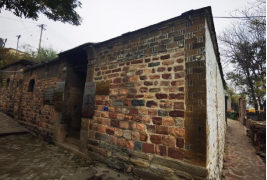
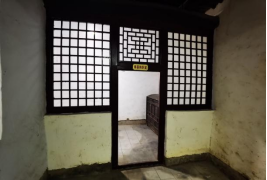
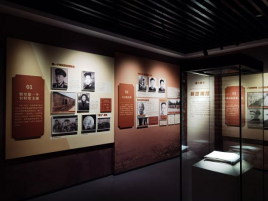
This site is located in Huangbeiping Village, Huangbeiping Township, where Taihang Mountain Geopark is situated. This courtyard, located in the heart of the Taihang Mountains beside the Huai River, served as the anti-Japanese leadership center in western Hebei and held an important strategic position. During the most difficult years of the War of Resistance Against Japanese Aggression from 1941 to 1945, Commander Qin Jiwei lived here. The headquarters of the First Taihang Military Subdistrict was located in a farmhouse courtyard with five main rooms. At that time, Commander Qin Jiwei lived in the west room of the main house. The site currently covers an area of 460 square meters, with a building area of 236 square meters. It bears witness to the glorious history of the heroic resistance of the soldiers and civilians of Zanhuang.
| 
|
| 
|
Former Site of the Headquarters of the First Taihang Military Subdistrict |
(9) Ancient Battlefield of Zanhuang Mountain
The Battle of Zanhuang Mountain was one of the key battles in the Tang Dynasty’s suppression of the An Lushan Rebellion. During the rebellion in 756, famous Tang generals Guo Ziyi and Li Guangbi fought fiercely here against the rebel forces of An Lushan and Shi Siming. Guo Ziyi and Li Guangbi used skillful tactics in this battle and successfully repelled the rebels, laying a foundation for the stability of the Tang Dynasty. The battle also demonstrated the high level of Tang military strategy. It is historically known as the “Battle of Zanhuang Mountain” and was one of the important turning points in the Tang Dynasty’s suppression of the An Lushan Rebellion.
(10) Ancient Military Stronghold of the Late Ming Period
The ancient military stronghold of the late Ming and early Qing period is an important witness to popular resistance against the Qing in the late Ming period, reflecting social unrest and the people’s awareness of self-protection at that time. It is not only a military site, but also important physical material for studying the history, military affairs, and folk culture of the late Ming and early Qing dynasties. The ancient military stronghold made full use of Zhangshiyan’s steep terrain and was built with defensive walls, watchtowers, sentry posts, and other military facilities. Most of the fortress walls were built with stones and were strong and durable. Some remains are still well preserved today. The stronghold also contained living areas and granaries, showing the integrated living conditions of soldiers and civilians at that time. At present, parts of the Zhangshiyan ancient military stronghold site remain well preserved and have become one of the important cultural landscapes of Zhangshiyan Scenic Area. Visitors can see remnants such as fortress walls and watchtowers here and feel the weight of history.
(11) Shiren Stronghold
Shiren Stronghold is named after its unique stone-figure landscape. These stone figures are naturally weathered rocks of various shapes, some resembling human figures and others resembling animals, leaving plenty of room for imagination. Shiren Stronghold not only has beautiful natural scenery, but also a rich historical and cultural background. It was once a strategic place contested by military forces in ancient times, leaving behind many historical remains and legendary stories. Visitors here can experience the extraordinary craftsmanship of nature and appreciate the depth of history. In addition, Shiren Stronghold is also a good place for hiking and mountain climbing, suitable for visitors who enjoy outdoor activities.
(12) “Hometown of Chancellors” — Xuting Village
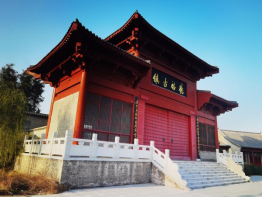
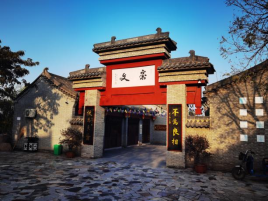
Xuting Village is a small mountain village in Zanhuang County. It has produced three zhuangyuan, six chancellors, and thirty-three jinshi scholars, and is historically known as “a place where literary stars gather,” “the hometown of zhuangyuan,” “the hometown of Tang chancellors,” and “the hometown of chancellors.” The village is located in the western hilly area of Zanhuang County, 15 kilometers from the county seat, and is the largest village and town in western Zanhuang. It is now the seat of Xuting Township Government. Xuting lies at the junction of Zanhuang, Jingxing, Xiyang, and Yuanshi counties. Surrounded by mountains on all sides, with higher terrain in the west and lower terrain in the east, and parallel mountains to the north and south, it is said to resemble a natural mountain city where the Eight Immortals celebrate longevity. Nine large gullies converge here, giving rise to the name “the meeting place of nine dragons.” It was once known as a land of fish and rice. The mountain peaks west of the village rise over 1,000 meters above sea level like screens and curtains. To the east, Jinziman Peak stands majestically; to the south and north, mountain ranges face each other in parallel. Near the village are five hills and two stone-walled dragon ridges that encircle the settlement. Therefore, Xuting Village is known as “Lotus Mountain City” and is called “Little Western Sichuan of Zanhuang.” The “Legend of the Six Chancellors of Zanhuang” from Xuting Village, Zanhuang County, was successfully included in the fifth batch of provincial intangible cultural heritage projects of Hebei Province. Today, Deyu Ancient Town has been built there, featuring themed antique-style buildings, supporting antique-style structures, and stone sculptures of the chancellors.
| 
|

| 
|
Deyu Ancient Town and Group Sculptures of Chancellors |
(13) Red Stone Street
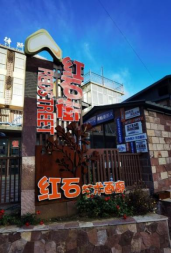
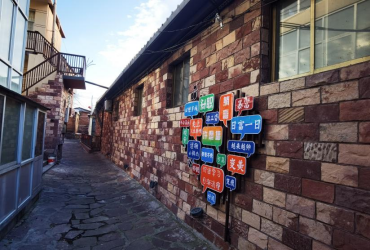
Located in Zhangshiyan Township, Red Stone Street is a modern popular tourism block integrating homestays, dining, entertainment, and art galleries.
| 
|
Red Stone Street |
6.3.2 Intangible Cultural Heritage
According to a preliminary survey, Zanhuang County has 30 items on its intangible cultural heritage list:
Intangible Cultural Heritage | List |
Folk Literature | Legends of Zhangshiyan, legends of Shizhushan, legends of Zanhuang Mountain, and legends of the Six Chancellors. |
Folk Dance | Zanhuang Iron Dragon Lantern, Hedong Flag Drum, Beiqinghe Ox Fighting Tiger, Yecaowan Lion Dance, Nanjie Cloth Dragon, and Nanxingguo Imperial Pole-Carrying Performance. |
Opera | Zanhuang Sixian Opera, Xuting Huai Tune, and Douling Yangko Opera. |
Quyi Folk Performing Arts | Beizhaoyu Daqian Songs and Nanpingwang Henan Zhuizi. |
Traditional Craftsmanship | Hujiazhuang stone carving, Zhaojiazhuang wood carving, Renjiadong paper cutting, and Wanzi fan drum making. |
Folk Customs | Chencun Laba Boat, Shibei Fireworks, Qinglongshan Temple Fair, and Wumashan Temple Fair. |
Traditional Sports | Nanguan Martial Arts. |
Recreation and Competitive Games | Thousand-Root Nine-Bend Yellow River Lantern. |
Traditional Medicine | Sanliugou treatment for infantile convulsions, Yanhuasi treatment for fire lumps, and Xiadalan scorpion curse. |
Traditional Music | Sunzhuang Chuige wind-and-percussion music and Zhongmayu folk tunes. |
Among them, the important folk activities include:
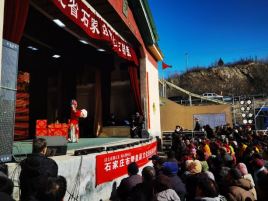
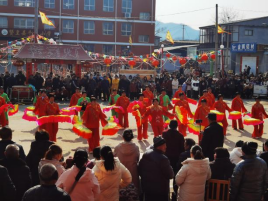
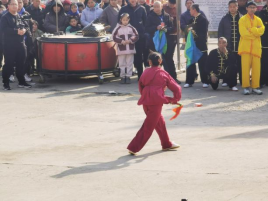
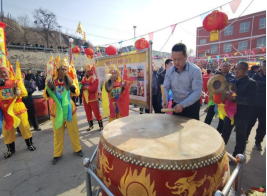
Zanhuang Laba Boat: The Zanhuang Laba Boat is a customary sacrificial ritual and cultural activity through which people pray for favorable weather, abundant harvests, good health, disaster prevention, national peace and prosperity, and freedom from war. The dry-land boat performance on Laba Day includes not only folk activities, but also opera, yangko dance, martial arts, acrobatics, scripture chanting, drum music, and other artistic performances. It brings together all these elements and serves as a miniature representation of local traditional folk culture. It is the most distinctive folk cultural activity in Zanhuang County and represents the inheritance and development of ancient Chinese Buddhist culture and rural folk art.
| 
|
Pingju Opera | Yangko Dance |
| 
|
Martial Arts | Drum Music |
|
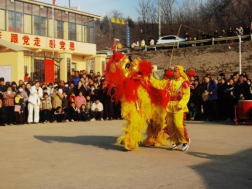
Zanhuang Iron Dragon Lantern: The Zanhuang Iron Dragon Lantern originated in the late Ming and early Qing dynasties. It is a traditional dragon dance art with a distinctive style, passed down in Zanhuang Town, Zanhuang County. After hundreds of years of development, it has become a cultural calling card of Zanhuang County. The Zanhuang Iron Dragon Lantern is a product of the combination of folk dance and folk music in Hebei Province. It comes from the people and is performed among the people as an entertainment activity during festivals and celebrations. The performance has a large lineup and requires more than 70 participants. Because the dragon head is heavy, each dragon head requires two strong adult men during the performance. In 2005, the Zanhuang Iron Dragon Lantern was listed as an intangible cultural heritage item of Hebei Province.
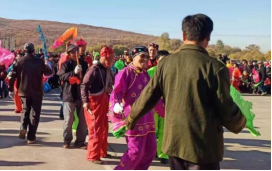
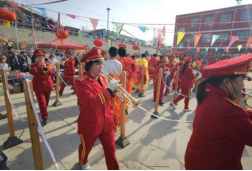
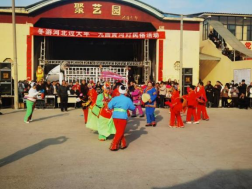
Qinglongshan Temple Fair: The Zanhuang Qinglongshan Temple Fair is held in Gushan Village, Zanhuang, at specific times each year—the third and tenth lunar months—and at a specific location, Gushan Village. It is a rain-praying ritual, temple fair, and cultural performance event. Its activities involve religious Taoist rituals such as sacrificial ceremonies and scripture chanting; artistic performances such as drum music, acrobatics, yangko dance, opera, and martial arts; as well as folk activities including temple fairs, tourism, and shopping.

|
Zanhuang Iron Dragon Lantern |
|
|
Zanhuang Temple Fair |